


All categories >
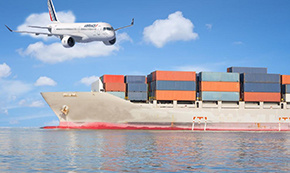
Recently, cargo demand on Asia–U.S. routes has risen sharply. Industry observers generally attribute this round of peak shipping activity, in part, to significant uncertainty surrounding U.S. tariff policies, prompting shippers to rush shipments in order to avoid the risk of potential additional tariffs.
As the 2026 Eid al-Adha approaches—expected around May 27—many Muslim-majority countries will enter their annual extended holiday period. Consequently, customs and port administration systems, as well as cross-border land transportation services, in the Middle East, along the Red Sea coast, in North Africa, South Asia, and parts of Southeast Asia, are likely to experience reduced efficiency or even temporary suspensions.
Anyone in cross-border e-commerce knows that the most frustrating part of the stocking process isn’t product selection or order volume—it’s choosing the right shipping line. Rush orders miss their delivery windows, and bestsellers sell out, leading to huge losses; opt for the cheapest carrier to save money, and you’ll either face container rejections and delays or a mountain of hidden fees; with small shipment volumes, it’s hard to find reliable logistics channels, while large volumes often fail to secure favorable rates…
Recently, U.S. CBP has continued to tighten customs risk controls, with 5H and 9H detentions and inspections becoming frequent chokepoints in cross-border freight shipments. As a result, many foreign trade enterprises and freight forwarding firms have encountered unwarranted cargo detention, port delays and storage fees, and even the risk of return shipments.
Interpretation of Inspection of Wooden Packaging for Imported Goods
Inspection of Imported Wood Packaging: Stringency is the Bottom Line, Safety is the Goal
#OOCL New Shipping Route #Indonesia Sea Freight #South China Foreign Trade #Southeast Asia Logistics #Huijietong Logistics #China-Indonesia Cross-Border Trade
New Maritime Law 2026, Article 93 of the New Maritime Law, Failure to Take Delivery at the Port of Destination, FOB Cargo Abandonment Risk
Recently, the U.S. Customs’ 5H inspection crackdown has continued to escalate, resulting in widespread detention, port delays, and even return shipments of cross-border goods, leaving sellers increasingly anxious.
With the official implementation of the new Maritime Law on May 1 fast approaching, discussions within the industry about the new regulations have once again intensified. Among these, the most closely watched and potentially disruptive change is the shift in liability for “goods left unclaimed at the discharge port”: the responsibility for related costs and risks is now explicitly assigned to the shipper rather than the consignee as under the previous regime. This adjustment fundamentally upends industry practice, exposing freight forwarders, shippers, and cross-border sellers alike to entirely new risk challenges.
Logistics Query
Quickly obtain the latest logistics information


Scan code contact
Address: 25/F Room C,Tower A, Honglong Century Plaza, No. 4002 Shennan East Road,Luo Hu District, Shenzhen, China
Zhongshan Address: Room 805, Floor 8 , Poly Plaza office Building, No. 1 Shiji East Road, Port Town, Zhongshan, Guangdong
Changsha Address: 12020, Building 2, Fudi Xingguang Tiandi, Yuhua District, Changsha .,Hunan
Indonesian company:PT VTOP LOGISTIK INTERNATIONAL
Indonesian address:Jalan Pantai Indah Barat Komplek Toho Blok A No 18 ,Kec.Penjaringan,Kel.Kamal Muara,Jakarta Utara

WeChat ID
Scan code contact