


All categories >
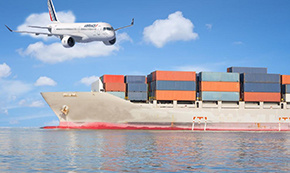
Urgent Alert: Starting May 1, the risk of FOB cargo abandonment will completely reverse! The new Maritime Law is a “liability bomb” aimed at foreign trade and freight forwarding—don’t wait any longer or it’ll be too late!
Categories:
News Center
News
Time of issue:
2026-04-30 17:58
Views:
🔥Major Overhaul After 30 Years! Effective May 1, Article 93 Directly Upends Industry Norms
From 1993 to 2026—after more than 30 years—the Maritime Law of the People’s Republic of China has迎来 First Comprehensive Revision , which shall come into effect on May 1, 2026.
Among them Article 93: Liability for Failure to Take Delivery at the Port of Destination A “nuclear-grade” adjustment—moving away from the 30-year-old “consignee liability” regime and completely replacing it with “Carrier’s Principle of Ultimate Liability” , directly rewrite the risk logic of foreign trade exports and international freight forwarding!
⚖️Comparison of Old and New Rules: The Risk Shifts Back from the “Overseas Buyer” to the “Domestic Seller/Forwarder”
Previous rule (formerly Article 86): Risk passes upon delivery of the goods to the ship.
If no one claims the cargo upon its arrival at port, the master may proceed with unloading. The costs and risks shall be borne by the consignee (the overseas buyer). 。
FOB sellers and domestic freight forwarders are generally reassured: once the goods are loaded onto the vessel, if the buyer abandons the shipment, the loss is theirs—none of our concern.
New Rule (New Article 93): The party who books the shipment shall be responsible.
If no one picks up the cargo at the discharge port, the master may discharge it to a warehouse. In principle, the costs and risks shall be borne by the shipper (the domestic booking party/seller). (The carrier must notify promptly)!
👉 There is only one exception: if the consignee, after having exercised its right to take delivery (including document exchange, collection of goods, and customs clearance), subsequently refuses to take delivery, the liability shall then fall on the consignee.
In a nutshell: In the past, “risk transferred upon delivery alongside the ship”; now, “as long as the bill of lading hasn’t been surrendered, the domestic party will absorb the loss if the cargo is abandoned.” !

💣FOB Foreign Trade Enterprises: The Most Dangerous “Invisible Bomb”—A Single Shipment Cancellation Could Wipe Out a Year’s Worth of Profits
Many international trade professionals operate on an FOB basis, assuming that “once the goods cross the ship’s rail, risk transfers to the buyer.” Following the entry into force of the new law, this understanding Completely invalidated !
Once any of the following situations occur at the port of destination:
- Buyer bankruptcy, breakdown of funding chain
- Soaring tariffs at the port of destination, trade frictions
- Market crash, buyers maliciously driving down prices or going missing
Lead to Abandoned goods, no one to pick them up , the shipping company has the right to Directly recover all costs from the domestic shipper (FOB seller). :
✅ Container detention charges (calculated per day; daily rate for a 40-foot container is several hundred U.S. dollars)
✅ Terminal storage fees, warehouse management fees
✅ Goods disposal fees, return/shipping destruction costs (which may far exceed the value of the goods)
Products with low value, seasonal demand, and difficulty in disposal—such as daily necessities, apparel, and furniture—pose the highest risks. A single abandoned order is enough to bring a small or medium-sized enterprise to its knees!
🚨 Freight Forwarding Companies: From “Intermediaries” to “Primary Responsible Parties”—Booking Cargo Means Assuming Full Liability
Article 44 of the new law makes a clear distinction:
- Contractual Shipper : The party that enters into a transportation contract with the shipping company (freight forwarder/foreign trade enterprise)
- Actual Shipper : The party that only makes the delivery (the factory)
In conjunction with the Supreme People’s Court’s Guiding Case No. 230: No liability for failure to pick up the goods; liability rests solely with the contracting carrier. !
👉 Freight forwarders only need Book cargo space in your own name —even if it is merely assisting the customer with operations, legally one is still a “contractual shipper,” and after the cargo is abandoned, the shipping company Prioritize recovery from the freight forwarder. !
👉 The accountability process is exceptionally smooth: no need to pursue overseas buyers across borders, File and enforce the lawsuit directly within China. !
✅ Urgent Response Checklist for Foreign Trade/Forwarding (Must be completed by May 1) Finished)
👉Foreign Trade Enterprises: Build a Triple Line of Defense with Contracts, Tracking, and Insurance
1. Contract Upgrade : The sales contract explicitly stipulates “obligation to pick up goods + substantial liquidated damages,” with priority. Letter of Credit Payment , or require the buyer to provide Bank Guarantee , link the risk of abandoned goods to the payment terms.
2. Full-process monitoring : Real-time tracking after shipment, set 7-Day Pre-Arrival Alert Upon discovering that the buyer has gone missing or that there are unusual market movements, immediately arrange for return shipment or resale.
3. Insurance coverage : To take out insurance Export Credit Insurance/Logistics Liability Insurance Specifically, coverage is clarified to include “container detention, demurrage, and disposal fees arising from abandonment of goods at the port of destination,” thereby avoiding the need to bear the full loss on one’s own.

👉 Freight forwarding companies: Conduct order reviews, amend contracts, and establish early-warning systems to avoid being held liable.
1. Inventory Order Review : Key梳理 Middle East, Africa, South America For high-risk routes, re-sign a written agreement with the customer. It is hereby clarified that the abandonment fees shall be borne by the actual consignor. 。
2. Update Contract Template : Booking agreement/freight forwarding contract plus “Special Clause on Liability for No-Show Pickup” It is agreed that the customer shall bear all costs associated with abandoned goods and authorizes the freight forwarder to dispose of such goods on their behalf.
3. Establish an early warning SOP : End-to-end monitoring of the shipment from dispatch to arrival at port; once signs of无人提货 are detected, Notify the customer within 24 hours. , Initiate return/transfer operations concurrently to prevent costs from snowballing.
✨ Quick Overview of Other Key Highlights of the New Law (Relevant to the Entire Industry)
With the exception of Article 93, the new Maritime Law comprises 16 chapters and 310 articles, and includes the following key changes:
✅ Legalization of Electronic Bills of Lading: Electronic vs. Paper Transport Documents Having equal legal effect , paperless maritime transport now has a legal basis.
✅ Strengthening environmental responsibility: Raising compensation standards for marine pollution to incentivize green shipping.
✅ Clarify liability boundaries: define the responsibilities of the actual carrier and combat unfair trade practices.
🤝 A New Compliance Option: Professional Customs Clearance in Shenzhen—Safeguarding Your Exports
After the new law takes effect, Document accuracy and compliance with declaration standards are directly linked to risk liability. —Once customs declaration errors result in clearance delays or cargo abandonment at the port of destination, the losses will only compound!
We have been deeply engaged in customs clearance in Shenzhen for many years, providing services to foreign trade enterprises and freight forwarders. High cost-effectiveness, high pass rate Document-based customs clearance services:
💴 100 yuan per ticket : Shenzhen document-based customs clearance—direct access to first-hand resources, no middlemen.
👥 Professional team of over 50 people : Senior customs declarants review documents to ensure zero errors and mitigate compliance risks.
🚢 South China’s core force, nationwide coverage : Operations can be conducted at major ports such as Shenzhen, Guangzhou, Shanghai, and Ningbo.
🤝 Large quantities, competitive pricing—long-term partnerships mean even more peace of mind. : Ensuring smooth customs clearance to safeguard your international trade

📞 Consultation Hotline
📣Final Thoughts
The essence of the revision of the new Maritime Law is Proactive mitigation of the risk of abandoned goods, shifting from “vague” to “clear” and from “overseas” to “domestic.” Short-term pain is inevitable, but proactively strengthening risk control and standardizing operations will, in fact, enable the establishment of Professional Barriers !
Tomorrow is May 1—act now: review contracts, train your team, and strengthen risk controls. Don’t let the new regulations turn into a “loss trap” for you!
Keywords:
Foreign trade export,International Freight Forwarding,Shenzhen Customs Clearance,Liability for Abandoned Goods,Demurrage charges,Export Risk Prevention and Control,Letter of Credit Payment
Logistics Query
Quickly obtain the latest logistics information


Scan code contact
Address: 25/F Room C,Tower A, Honglong Century Plaza, No. 4002 Shennan East Road,Luo Hu District, Shenzhen, China
Zhongshan Address: Room 805, Floor 8 , Poly Plaza office Building, No. 1 Shiji East Road, Port Town, Zhongshan, Guangdong
Changsha Address: 12020, Building 2, Fudi Xingguang Tiandi, Yuhua District, Changsha .,Hunan
Indonesian company:PT VTOP LOGISTIK INTERNATIONAL
Indonesian address:Jalan Pantai Indah Barat Komplek Toho Blok A No 18 ,Kec.Penjaringan,Kel.Kamal Muara,Jakarta Utara

WeChat ID
Scan code contact