


All categories >
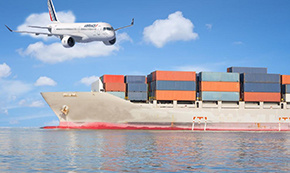
What challenges will international logistics face in 2025 (International Shipping News)
Categories:
Time of issue:
2024-12-06 18:02
Due to ongoing challenges in the shipping industry, including tariff threats following Trump's election as U.S. President and the situation in the Red Sea, global shipping costs are expected to remain high next year, and shipping fees may continue to rise. Lin Jinsheng, Executive Director of CMA CGM in Taiwan, pointed out that the additional tariffs imposed by the U.S. on goods imported from China may lead China to seek new markets and shift trade routes.
to Europe, Southeast Asia, and other regions.
Lin Jinsheng made these remarks while discussing transportation, containers, and bulk shipping at the Asian Maritime Law and Business Conference. China may seek new markets.
Lin Jinsheng stated that the biggest challenge China faces is to increase its Gross Domestic Product (GDP).
"In the context of overcapacity, this is why its goods are so cheap. For example, China's electric vehicles are significantly cheaper compared to Elon Musk's electric vehicles.
"Does increasing tariffs mean that China's total production will decrease? For China, reducing output is not feasible. Therefore, in the context of overcapacity, where will China go? If they cannot export to the U.S., they will turn to Europe."
"If Europe also raises tariffs, there is no doubt that the Middle East, Southeast Asia, and Latin America will follow suit. This is why you see many changes in trade flows. He said that U.S. retailers are expected to accelerate the shipment of inventory to relevant countries before the tariffs are implemented.
Shipping time extended due to detours.
He stated that ongoing geopolitical tensions will also lead to extended shipping times.
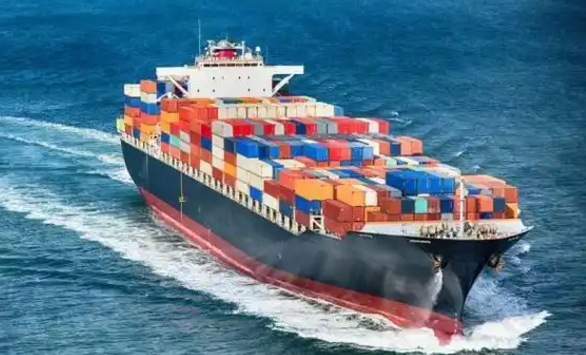
"Vessels are forced to detour around the Cape of Good Hope, which has resulted in a reduction of about 1.2 million twenty-foot equivalent units (TEU) in container supply.
"A one-way trip takes about 14 days, so it takes about 2 to 4 weeks. Generally, container shipping is done weekly, which means 4 ships are needed for each round trip. Dut: Risk increases, insurance premiums rise.
On the other hand, Dute, Executive Director of Singapore OM Maritime Shipping Private Limited, said that due to the impact of the crisis, shipping companies need to pay higher insurance costs. "Insurance costs are adjusted based on changes in risk levels... If an attack occurs yesterday, today's insurance costs will increase.
"If crew members agree to work in high-risk areas, they usually receive at least 5 days of extra pay. Although many will negotiate for more, if the crew refuses, the shipowner must bear the extra costs, including training, replacement personnel, and salary payments.
He stated that in the most severe risk situations, the cost of operating a small vessel could be as high as $250,000.
Logistics Query
Quickly obtain the latest logistics information


Scan code contact
Address: 25/F Room C,Tower A, Honglong Century Plaza, No. 4002 Shennan East Road,Luo Hu District, Shenzhen, China
Zhongshan Address: Room 805, Floor 8 , Poly Plaza office Building, No. 1 Shiji East Road, Port Town, Zhongshan, Guangdong
Changsha Address: 12020, Building 2, Fudi Xingguang Tiandi, Yuhua District, Changsha .,Hunan
Indonesian company:PT VTOP LOGISTIK INTERNATIONAL
Indonesian address:Jalan Pantai Indah Barat Komplek Toho Blok A No 18 ,Kec.Penjaringan,Kel.Kamal Muara,Jakarta Utara

WeChat ID
Scan code contact