


All categories >
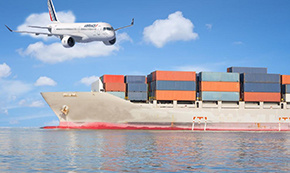
German trains and planes both held a general strike (note the international air rail transport cargo delay)
Categories:
Time of issue:
2024-03-08 14:57
Labor talks between the German train drivers' union (GDL) and Deutsche Bahn (DB) broke down again last Thursday. On March 5, the German train drivers' union (GDL) announced that it would once again hold a general rail strike across Germany.
Klaus Wesselsky (Claus Weselsky), chairman of the German train drivers' union, said that from 18: 00 p.m. on March 6, drivers in the freight sector first went on strike; from 2: 00 a.m. on Thursday (March 7), passenger drivers began to strike. The strike will last 35 hours.
Wesselsky said, "35 hours is to make everyone aware of the union's demands: the 35-hour work week."
According to media reports, the main reason for the failure of the latest round of negotiations is still the issue of working 35 hours a week and providing full pay compensation for shift workers. The German train drivers' union (GDL) insists Deutsche Bahn has not made enough progress on the issue.
The chairman also explained that a "wave of strikes" would follow. The union will no longer give 48-hour notice of a work stoppage. "It means rail is no longer a reliable mode of transportation," Wesselsky said.
As in past strikes, DB has promised to provide basic transport services during the outage, but passengers traveling long distances are advised to book their seats as early as possible because of the limited availability of seats. Passengers who have ordered tickets for March 7 and 8 can refund or change their tickets.
Deutsche Bahn said the announced strike would have a huge impact on operations. Chief Human Resources Officer Martin Seiler was particularly critical of the surprise "wave strike" plan. "These so-called wave strikes are purely imposed on our passengers".
Seiler said it was striking again because the train drivers' union was not getting its highest demands. "This is stubborn and selfish behavior. "Deutsche Bahn is still ready to find constructive but realistic solutions. However, the maximum requirements of the GDL are impossible to achieve and pose a considerable threat to the railway system.
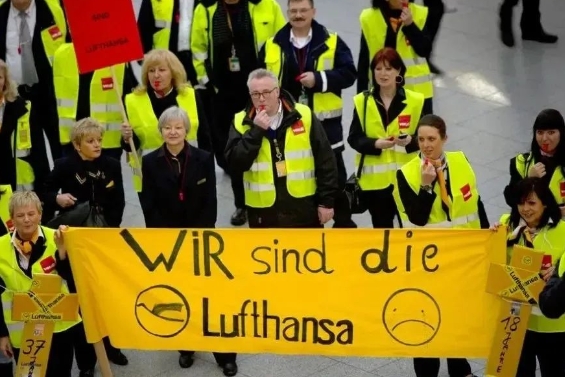
The ver.di union, which also wants to put pressure on the management, called on all Lufthansa ground crew to strike on Thursday and Friday this week. It is expected to start at 4:00 am on Thursday and finish at 7:10 am on Saturday. Therefore, passengers must be prepared for a large number of cancellations and restrictions.
"No one can understand that this company will announce record annual results this week, and the bonuses of board members will be greatly increased, regardless of how the front-line employees who earn only 13 euros per hour are doing, you must know that we still have to break even in Germany's most expensive city". ver.di negotiator Marvin Reschinsky explained.
Ver.di demanded a 12.5 per cent wage increase and a one-year inflation allowance. So far, Lufthansa has agreed to offer a 10% pay rise for 28 months.
There have already been two warning strikes in a collective bargaining dispute involving about 25000 ground workers, each bringing passenger traffic to a standstill for about a day. Lufthansa expressed anger at the ongoing warning strike and specifically criticized ver.di's return to the negotiating table to pressure with such a move.
Logistics Query
Quickly obtain the latest logistics information


Scan code contact
Address: 25/F Room C,Tower A, Honglong Century Plaza, No. 4002 Shennan East Road,Luo Hu District, Shenzhen, China
Zhongshan Address: Room 805, Floor 8 , Poly Plaza office Building, No. 1 Shiji East Road, Port Town, Zhongshan, Guangdong
Changsha Address: 12020, Building 2, Fudi Xingguang Tiandi, Yuhua District, Changsha .,Hunan
Indonesian company:PT VTOP LOGISTIK INTERNATIONAL
Indonesian address:Jalan Pantai Indah Barat Komplek Toho Blok A No 18 ,Kec.Penjaringan,Kel.Kamal Muara,Jakarta Utara

WeChat ID
Scan code contact