


All categories >
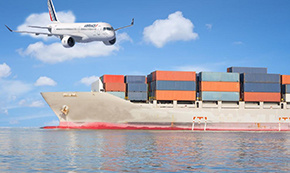
With the official implementation of the new Maritime Law on May 1 fast approaching, discussions within the industry about the new regulations have once again intensified. Among these, the most closely watched and potentially disruptive change is the shift in liability for “goods left unclaimed at the discharge port”: the responsibility for related costs and risks is now explicitly assigned to the shipper rather than the consignee as under the previous regime. This adjustment fundamentally upends industry practice, exposing freight forwarders, shippers, and cross-border sellers alike to entirely new risk challenges.
What’s going on with a dual-header bill of lading?
A dual-named bill of lading (dual named B/L) is a bill of lading that lists the names of two companies as consignees.
What’s the difference between a PI and an INVOICE?
A PI (Proforma Invoice, Proforma Invoice) and an INVOICE (Commercial Invoice, Commercial Invoice) are two core documents in international trade. They differ fundamentally in terms of their purpose, legal effect, and timing of issuance.
Is charcoal export prohibited, but can engineered charcoal be exported normally?
Goods from unregistered brands are being traced by rights holders. The core processing logic involves first securing the scene, then gathering evidence, and finally resolving the issue along different paths: urgently addressing customs detentions and rights-holder complaints, swiftly verifying the ownership of rights and the compliance of authorizations, and following appropriate procedures—whether it’s a compliance defense, settlement, or loss-control measures—depending on whether infringement has occurred. At the same time, we’ll ensure thorough risk prevention and control for the future. Next, Huijetong will provide you with a detailed explanation; we hope this will be helpful to you.
Dry Goods on the Export Process for Class 3 Dangerous Goods
Dangerous goods are classified into a total of 9 categories, with flammable liquids falling under Category 3. Common examples include alcohol, paints, coatings, resin solvents, gasoline, diesel fuel, and more. Today, we’ll provide a detailed explanation of an export case involving UN1268 lighter fuel—covering everything from booking shipments, obtaining the dangerous goods packaging certificate, to crucial tips for customs declaration and inspection. This comprehensive guide will ensure you avoid unnecessary detours and pitfalls along the way.
Must-save guide for international traders: Which are the world's major gateway ports?
In international maritime transport, a "basic port" refers to a key hub port in a country or region—similar to a major transit station in railway transportation. Ships typically call at these ports, which boast advanced infrastructure, well-developed container handling facilities, and a high concentration of supporting service providers (such as freight forwarders, customs brokers, and trucking companies). As a result, these ports feature frequent vessel schedules, substantial and stable cargo volumes.
Logistics Query
Quickly obtain the latest logistics information


Scan code contact
Address: 25/F Room C,Tower A, Honglong Century Plaza, No. 4002 Shennan East Road,Luo Hu District, Shenzhen, China
Zhongshan Address: Room 805, Floor 8 , Poly Plaza office Building, No. 1 Shiji East Road, Port Town, Zhongshan, Guangdong
Changsha Address: 12020, Building 2, Fudi Xingguang Tiandi, Yuhua District, Changsha .,Hunan
Indonesian company:PT VTOP LOGISTIK INTERNATIONAL
Indonesian address:Jalan Pantai Indah Barat Komplek Toho Blok A No 18 ,Kec.Penjaringan,Kel.Kamal Muara,Jakarta Utara

WeChat ID
Scan code contact