

All categories >
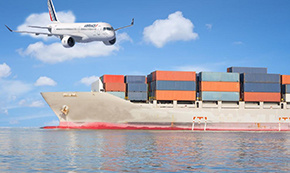
What is an SOC container? An SOC container (Shipper’s Own Container), or “shipper‑owned container,” refers to a situation where, when using a shipping line’s transport services, the shipper provides its own container for stuffing the cargo, rather than using a COC container (Carrier’s Own Container) supplied by the carrier.
Freight forwarders and manufacturers engaged in China–U.S. trade and shipping on U.S.-bound routes have almost certainly encountered the pitfalls of incorrect HTS code entries: domestic customs declarations use a 13-digit HS code, yet upon clearance in the U.S., shipments are rejected, resulting in hefty additional duties and prolonged detention for inspection. Today, Huijietong draws on real-world case studies to break down the differences between Chinese and U.S. tariff classifications, outline reliable query channels, and highlight key strategies for avoiding these issues—helping you confidently manage your customs‑clearance costs.
Huijietong has compiled a comparative table of free‑time and demurrage charges for the seven major U.S. East Coast carriers; we recommend that peers in the U.S. East Coast shipping industry save this resource.
In international logistics, documentation comes first. From booking space and loading the vessel to customs declaration, clearance, and final pickup at the destination port, documents underpin every step and determine success or failure. A single error, omission, or discrepancy can result in minor issues like document amendments and schedule delays; in more serious cases, it may lead to cargo detention, return shipment, hefty fines, or even trade disputes.
Anyone in cross-border e-commerce knows that the most frustrating part of the stocking process isn’t product selection or order volume—it’s choosing the right shipping line. Rush orders miss their delivery windows, and bestsellers sell out, leading to huge losses; opt for the cheapest carrier to save money, and you’ll either face container rejections and delays or a mountain of hidden fees; with small shipment volumes, it’s hard to find reliable logistics channels, while large volumes often fail to secure favorable rates…
Recently, U.S. CBP has continued to tighten customs risk controls, with 5H and 9H detentions and inspections becoming frequent chokepoints in cross-border freight shipments. As a result, many foreign trade enterprises and freight forwarding firms have encountered unwarranted cargo detention, port delays and storage fees, and even the risk of return shipments.
How to Prevent the Risk of Lithium Battery Fires During Sea Transportation
How to Prevent the Risk of Lithium Battery Fires During Sea Transportation
Recently, the U.S. Customs’ 5H inspection crackdown has continued to escalate, resulting in widespread detention, port delays, and even return shipments of cross-border goods, leaving sellers increasingly anxious.
Logistics Query
Quickly obtain the latest logistics information


Scan code contact
Address: 25/F Room C,Tower A, Honglong Century Plaza, No. 4002 Shennan East Road,Luo Hu District, Shenzhen, China
Zhongshan Address: Room 805, Floor 8 , Poly Plaza office Building, No. 1 Shiji East Road, Port Town, Zhongshan, Guangdong
Changsha Address: 12020, Building 2, Fudi Xingguang Tiandi, Yuhua District, Changsha .,Hunan
Indonesian company:PT VTOP LOGISTIK INTERNATIONAL
Indonesian address:Jalan Pantai Indah Barat Komplek Toho Blok A No 18 ,Kec.Penjaringan,Kel.Kamal Muara,Jakarta Utara

WeChat ID
Scan code contact