


All categories >
Is the game over for East Coast port employers in the United States? (International Shipping News)
Categories:
Time of issue:
2024-12-23 12:13
When President-elect Donald Trump publicly supported the International Longshoremen's Association in its tough fight to prevent container automation technology from entering East Coast and Gulf Coast ports, the initial feeling was just that.
Trump has become accustomed to ruling by command through social media, and days later, he retweeted a post by ILA Executive Vice President Dennis Daggett on Facebook, which described a meeting held at Trump's Mar-a-Lago estate that included his father, ILA President Harold Daggett.
How long can the United States Maritime Alliance, representing shipping terminal operators and maritime carriers, withstand this pressure?
From this perspective, it was only when Trump threatened to impose tariffs that one could see how quickly Mexico and Canada reacted.
Although newly elected President Claudia Scheinbaum initially threatened to impose tariffs on U.S. goods, it now seems unlikely because Mexico cannot afford a trade war with its largest trading partner given the weak peso.
In Canada, Ontario has made noise about tariffs and suspending electricity sales to the U.S., but this seems to have become reality as Justin Trudeau's federal government announced an investment of $900 million for border security and conducted large-scale seizures of fentanyl smugglers who were sending thousands of potentially lethal doses to the U.S.
(Trudeau and his party also have their own issues with post-pandemic economic growth lagging and stubborn labor unrest in areas ranging from ports and railroads to Canada Post, with polling results hovering around the twenties.)
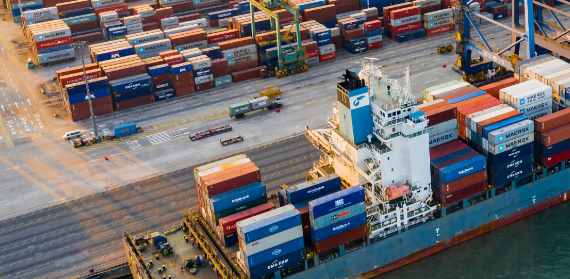
Before the American Association of Port Authorities suspended contract negotiations this month, it made clear that it is a semi-automated container crane that is putting a new coastal contract involving tens of thousands of union workers from Maine to Texas on hold. Prior to this, the American Association of Port Authorities was content to issue mildly worded press releases mentioning automation technology. But not anymore.
By any measure, shipping companies have had a stellar year. While global markets stagnated, the U.S. economy stumbled under strong consumer demand, driving record imports of containers into the U.S., especially from China. Attacks on ships by Houthi rebels in Yemen and vessels near the Horn of Africa extended routes diverted from the Red Sea towards Europe, the Mediterranean, and America, consuming capacity and driving up shipping rates so much that airline profits surged by billions.
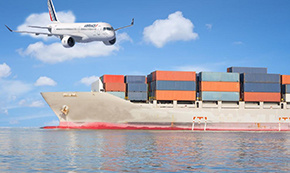
While some cargo was shifted to other ports during the three-day International Shipping Association strike in October, it seems importers (and exporters) had no reasonable alternatives to maritime transport. Air freight is expensive and cannot accommodate large volumes or various types of transoceanic cargo including agricultural products or vehicles which also fall under International Shipping Association jurisdiction.
It is certain that during negotiations executives have been reluctant to step forward as public advocates for foreign shipping companies which undermined their efforts at effective communication. The International Labor Association has repeatedly sounded alarms about how automation will eliminate union jobs. Employers argue that port automation is needed to improve efficiency at East Coast hubs while creating more union jobs to manage larger volumes of containers.
But operators still have cards to play. Although Houthi forces signaled a significant shift in their rapidly changing regional situation this week regarding the Red Sea, it may take months before carriers and their underwriters feel safe returning to the area—and only after rebel withdrawal. They also hope to maintain high rates during contract formulation season until 2025 when new ships and alliances are expected further change supply chain dynamics.
Therefore, there is a high likelihood of another port strike occurring but like before it will be brief. Just like previous President Biden did not stop work stoppages; Trump will not either. Acting Labor Secretary Julie Su ended strikes through mediation granting unions a pay raise of 62% while extending current contracts until January 15th.
Savvy investors keep both sides in check. Trump could allow American labor unions to strike for a week or less—that’s when ships really start lining up—then suddenly intervene helping craft an agreement where unions accept a discounted proposal testing automation in exchange for promises of creating more jobs. Trump wins; container handling continues while Harold Daggett hands over control of the union he led for years over to his son receiving parting gifts.
But today as negotiations stall with deadlines approaching there seems no Julie Su since Trump's cabinet picks will take months more before being confirmed. Although the Taft-Hartley Act gives presidents power to order an end to strikes threatening national security—as President George W. Bush did in ending West Coast dockworker strikes in 2002—it’s hard to imagine Trump forcing labor associations back into work.
Logistics Query
Quickly obtain the latest logistics information


Scan code contact
Address: 25/F Room C,Tower A, Honglong Century Plaza, No. 4002 Shennan East Road,Luo Hu District, Shenzhen, China
Zhongshan Address: Room 805, Floor 8 , Poly Plaza office Building, No. 1 Shiji East Road, Port Town, Zhongshan, Guangdong
Changsha Address: 12020, Building 2, Fudi Xingguang Tiandi, Yuhua District, Changsha .,Hunan
Indonesian company:PT VTOP LOGISTIK INTERNATIONAL
Indonesian address:Jalan Pantai Indah Barat Komplek Toho Blok A No 18 ,Kec.Penjaringan,Kel.Kamal Muara,Jakarta Utara

WeChat ID
Scan code contact