


All categories >
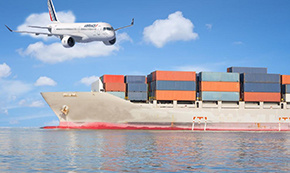
International shipping rates will climb to $20,000? (There is no guarantee that rates will not reach epidemic highs)
Categories:
News Center
Time of issue:
2024-07-05 16:46
Views:
Enterprises are worried about the new tariff policy to be implemented in Europe and the United States, have adopted the strategy of early shipment, coupled with the ongoing crisis in the Red Sea region, resulting in the re-emergence of serious port congestion on Asia-Europe routes, this phenomenon directly contributed to the sharp rise in shipping freight. Some industry bodies predict that freight rates are likely to climb to the $20,000 level, possibly even hitting their highest point during the epidemic, and that this high rate state is expected to continue until the Lunar New Year.
Specific data show that the price of shipping in stock from the Far East to the United States has seen a significant monthly increase in recent months, reaching between 36% and 41%. In addition, shipping companies have raised surcharges by about 140 per cent, a combination of factors that have sent freight rates for each 40-foot standard container (FEU) soaring to about $12,000.

The shipping platform Freightos tracked the price of FEU in stock on 12 major routes around the world, and the results showed that since May, freight rates have rebounded and jumped to $4500 in one fell swoop, a price level that is more than three times the price before the new crown epidemic. In late June, the FEU freight rate from the Far East to the west coast of the United States exceeded $7000, while the freight rate from the Far East to the east coast of the United States soared, exceeding $8000.
The vice president of global supply chain at ITS Logistics pointed out that the current severe shortage of containers and the limitation of overseas transportation capacity have forced cargo owners to turn to the in stock market and try to find container equipment directly at the place of shipment for loading. This shift has not only increased competition in the market, but has also significantly pushed up freight rates to highs not seen in the two years since the outbreak.
Agency: There is no guarantee that freight rates will not go up to the high point of the epidemic.
Sea-Intelligence, a shipping consultant, published an analysis of the current shipping market situation, saying that due to the unresolved crisis in the Red Sea region, the price of in stock on the Eurasian route may exceed the US $20,000 mark if the number of nautical miles added by the ship's detour is taken into account. Specifically, diverting the African Cape of Good Hope will extend the voyage by about 11,000 nautical miles (equivalent to 1 to 2 weeks). The agency further estimates that if quotations per nautical mile return to levels seen during the epidemic, the price of in stock from Shanghai to Rotterdam, the Netherlands, will reach $18,900 per 40-foot standard container (FEU), while rates from Shanghai to Genoa, Italy, will climb to $21,600.
Sea-Intelligence CEO Murphy stressed: "As long as there are enough shippers in the market willing to pay high prices, in stock prices will continue to rise. While it is unlikely that in stock prices will fully surpass the highs of the epidemic period, this cannot be completely ruled out." He also predicted that the highest in stock prices on routes from the east and west coasts of the United States to Asia were likely to equal those recorded during the epidemic, when some routes had freight rates as high as $30,000.
According to AXSMarine data, although the delivery of new ships this year has increased the capacity of 1 million TEUs (TEU), the proportion of the global idle fleet has dropped to 0.6 per cent, the lowest since February 2022 and well below the normal value of about 3 per cent. This data reflects the tight shipping market and the high utilization of capacity.
DHL Global Freight's head of shipping, Lebrand, said he did not expect freight rates to decline anytime soon. He pointed out that the current market conditions are difficult to improve on their own, so freight rates may remain high until the Lunar New Year, and it is difficult to see obvious signs of relief.
Asia-Europe port congestion part of the container rent doubled
The advance stocking strategy of the global trade industry has led to severe congestion at Eurasian ports. DHL issued a warning that the port of Singapore has been facing congestion problems for several weeks, while major Chinese ports, especially Shanghai and Qingdao, are also facing challenges with significantly increased waiting times.
Port performance data from S & P global think tank shows that between mid-April and mid-June, the average waiting time for ships in the port of Singapore increased by 15%. Meanwhile, Europe's ports of Barcelona, Spain, and Antwerp, Belgium, have also suffered severe congestion in recent weeks.
The container shipping intelligence company Linerlytica pointed out that the increase in port congestion has stranded the capacity of about 2 million TEUs, which is equivalent to nearly 7% of the global total capacity. Tight capacity has led to fewer voyages and a decline in the number of containers that can be transported, which in turn has pushed up the price of empty containers. In addition, in order to avoid the crisis in the Red Sea region, the ship chose to bypass the Cape of Good Hope. This route adjustment not only extended the sailing time, but also made more containers stranded on the ship, further limiting the supply of empty containers.
In this context, container rents have soared. Container xChange, an online container trading platform, said that the average cost of leasing containers in Singapore in May increased by 26% compared with the same period last year, while the cost of renting containers to Los Angeles and Long Beach in the United States has doubled since November last year.
Faced with the tension of shipping capacity, some enterprises choose to turn to air transport, which also contributed to the rise of air transport prices. According to freight intelligence company Xeneta, the price of air in stock from mainland China to North America increased 43% year-on-year to $4.88 per kilogram in May. The company predicts that the global air freight market is expected to achieve double-digit growth in freight volume this year due to a 12 percent year-on-year increase in air demand in May.
It is worth noting that e-commerce giant SHEIN (Xiyin) and Pinduoduo's Temu, as well as companies in the semiconductor industry, are more inclined to choose air freight as a freight method. However, Ives, an analyst at Wedbush Securities, warned that if costs remain high by the end of the summer, this will put upward pressure on the prices of Apple and chip products, which may eventually need to be passed on to end users and consumers.
Keywords:
New tariff policy,Asia-Europe route,Port congestion
Logistics Query
Quickly obtain the latest logistics information


Scan code contact
Address: 25/F Room C,Tower A, Honglong Century Plaza, No. 4002 Shennan East Road,Luo Hu District, Shenzhen, China
Zhongshan Address: Room 805, Floor 8 , Poly Plaza office Building, No. 1 Shiji East Road, Port Town, Zhongshan, Guangdong
Changsha Address: 12020, Building 2, Fudi Xingguang Tiandi, Yuhua District, Changsha .,Hunan
Indonesian company:PT VTOP LOGISTIK INTERNATIONAL
Indonesian address:Jalan Pantai Indah Barat Komplek Toho Blok A No 18 ,Kec.Penjaringan,Kel.Kamal Muara,Jakarta Utara

WeChat ID
Scan code contact