


All categories >
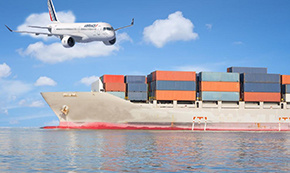
With the official implementation of the new Maritime Law on May 1 fast approaching, discussions within the industry about the new regulations have once again intensified. Among these, the most closely watched and potentially disruptive change is the shift in liability for “goods left unclaimed at the discharge port”: the responsibility for related costs and risks is now explicitly assigned to the shipper rather than the consignee as under the previous regime. This adjustment fundamentally upends industry practice, exposing freight forwarders, shippers, and cross-border sellers alike to entirely new risk challenges.
What’s going on with a dual-header bill of lading?
A dual-named bill of lading (dual named B/L) is a bill of lading that lists the names of two companies as consignees.
Starting February 24, China's export tariffs to the U.S. will be reduced from 20% to 10%.
According to the latest information from Huijetong: At 08:32 a.m. Beijing time today (February 24) and at 07:32 p.m. Eastern Time on the evening of February 23, the U.S. Customs and Border Protection (CBP) issued a new announcement numbered CSMS #67844987!
For the first time, the foreign trade logistics process is explained so clearly!
For the first time, the foreign trade logistics process is explained so clearly!
From the beginning of the year, the global container shipping market has shown a significant deterioration in its fundamentals, forcing shipping companies to strengthen their capacity management strategies. Imbalanced demand, downward pressure on freight rates, and high operational uncertainty have collectively led to a sharp increase in blank sailings—particularly on key east-west trade routes.
The year's traffic congestion at the dock is concentrated in these few days.
The automobile tariff rate has been reduced from 110% to a minimum of 10%. The wine tariff has been reduced from 150% to a minimum of 20%.
Logistics Query
Quickly obtain the latest logistics information


Scan code contact
Address: 25/F Room C,Tower A, Honglong Century Plaza, No. 4002 Shennan East Road,Luo Hu District, Shenzhen, China
Zhongshan Address: Room 805, Floor 8 , Poly Plaza office Building, No. 1 Shiji East Road, Port Town, Zhongshan, Guangdong
Changsha Address: 12020, Building 2, Fudi Xingguang Tiandi, Yuhua District, Changsha .,Hunan
Indonesian company:PT VTOP LOGISTIK INTERNATIONAL
Indonesian address:Jalan Pantai Indah Barat Komplek Toho Blok A No 18 ,Kec.Penjaringan,Kel.Kamal Muara,Jakarta Utara

WeChat ID
Scan code contact