


All categories >
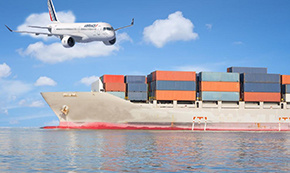
Unbelievable! Freight rates have surged by over 60%! Direct sailings have been replaced with transshipments, and containers are being released without any notice!
Categories:
Time of issue:
2026-06-05 16:30

Recently, cargo demand on Asia–U.S. routes has risen sharply. Industry observers generally attribute this round of peak shipping activity, in part, to significant uncertainty surrounding U.S. tariff policies, prompting shippers to rush shipments in order to avoid the risk of potential additional tariffs.
Meanwhile, U.S. Independence Day inventory‑building demand, combined with the consumption boost from major international sporting events, is further driving a rapid surge in end‑market restocking. In response to this heightened demand, several shipping lines have already launched新一轮 of rate hikes.

U.S.-bound freight rates surged more than 60% month-over-month.
The Shanghai Containerized Freight Index (SCFI) has already Rising for five consecutive weeks On May 29, the index closed at 2,571.73 points, up 15.9% from the previous period and reaching a new high since September 2024.
The increase on the U.S. route has been even more astonishing—within just one month, West Coast route The phased increase is approaching. 76%, The increase in the Eastern U.S. exceeded 60%. , setting a new year-to-date record.
This round of price hikes is not a minor, piecemeal adjustment by the shipping lines; rather, it represents a structural surge driven by the cumulative effect of three distinct cost components:
Base freight rates increased: Starting in June, major carriers will uniformly raise their U.S. East Coast rates and implement a peak-season surcharge (PSS).
Additional Charge: Maersk will impose a PSS fuel surcharge starting June 17.
Joint Price Hike: MSC to Increase the Emergency Fuel Surcharge (EFS) Effective June 1
With these three layers of costs compounding, export expenses continue to rise and show no signs of easing in the near term.
According to Huatai Futures, Maersk continued to raise its rates in the second week of June, with market demand remaining resilient and shipping lines showing a strong willingness to maintain higher prices.
Seats are hard to come by, and “booking one flight only to have it canceled” has become the norm.
The root cause of the sharp surge in freight rates is an acute shortage of available container space, leading to a severe imbalance between market supply and demand.
Currently, Yantian, Nansha, Ningbo Major shipping ports The highest cabinet abandonment rate has reached 55%. , cargo booked on certain routes The carryover rate exceeds 80%. Specifically, it manifests as:
For a standard booking of 20 containers, typically only 2 can be shipped as originally scheduled.
In the East China region, space on U.S.-bound and Europe-bound routes has been nearly fully booked as of early June.
“Booking one flight and canceling another” has become the norm across the industry.
According to China Shipping Weekly, Cabin space on some routes for June is already nearly sold out. , the current peak shipping period is expected to last 1–2 months.
The core pain points of U.S.-bound shipments have shifted: It’s no longer a question of “whether freight rates are high or not,” but rather “…”. Whether we can secure a cabin and board the ship as scheduled The problem.

Direct sailings now require a transit, and container drop-offs are not notified.
Recently, some freight forwarders have reported that the U.S. West Coast market is once again facing a vexing issue: When booking the shipment, a direct sail was displayed, but after the vessel departed, it was changed to a Busan transshipment. 。
The shipping companies involved include Maersk 、 Yang Ming Marine Transport and ONE Including major shipping lines.
What’s even more troublesome is that many cabinets… After arriving in Busan, we even experienced a container being abandoned. 。 Some are delayed by a week, and some even have to… Wait for half a month. . Throughout the entire process, the shipping company did not issue any proactive notification— There are neither email notifications nor system push alerts. 。
Many freight forwarders only discover, when tracking vessel schedules, that their originally scheduled direct‑sail container has already been rerouted to Busan.
Industry insiders analyze that such situations may be related to the terms of the bill of lading. Most shipping lines reserve the right in the bill of lading to adjust the route or mode of transshipment based on actual circumstances.
During peak seasons, when space is tight, shipping lines typically prioritize local shipments and the cargo volumes of major customers, while containers destined for ad hoc transshipments are more likely to be scheduled on later sailings.
In other words, transit containers temporarily rerouted to a port typically receive the lowest loading priority; if subsequent vessels also experience space shortages, this cargo is likely to be re‑routed again. Rolling swing cabinet 。

For shippers, the most significant impact is delays in delivery times. But for freight forwarders, the more awkward issue is information opacity.
The customer believed they had booked a direct flight, but it ended up being a connecting flight, leaving the freight forwarder to shoulder the brunt of the final explanations and communication.
Industry insiders recommend that, during subsequent booking or contract negotiations, shippers should confirm in advance whether a direct‑voyage commitment clause is included and verify whether the cargo‑insurance coverage extends to scenarios such as container drop‑off at intermediate ports.
As the U.S. peak season gains momentum, it remains to be seen whether similar situations will become more frequent going forward—this warrants ongoing monitoring.

Shenzhen Huijietong International Freight Forwarding Co., Ltd. – Professional U.S.-Route Transportation Services
In the U.S.-bound shipping sector, Shenzhen Huijietong International Freight Forwarding Co., Ltd. has earned the trust of numerous clients thanks to its professional services and extensive experience. Specializing in U.S.-bound transportation, the company offers end-to-end logistics solutions, encompassing ocean, air, and land freight, as well as warehousing services. By maintaining close partnerships with major shipping alliances, Huijietong can provide flexible space arrangements and efficient transport services tailored to customer needs.
Choosing Huijietong International Freight Forwarding Co., Ltd. means choosing professional, efficient, and reliable logistics services. For more details, please visit the official website at www.szvif.com.
When you travel to the United States, choose Huijietong!
Shenzhen Huijietong International Freight Forwarding Co., Ltd., your trusted partner for U.S.-bound shipping.

WeChat QR code
Logistics Query
Quickly obtain the latest logistics information


Scan code contact
Address: 25/F Room C,Tower A, Honglong Century Plaza, No. 4002 Shennan East Road,Luo Hu District, Shenzhen, China
Zhongshan Address: Room 805, Floor 8 , Poly Plaza office Building, No. 1 Shiji East Road, Port Town, Zhongshan, Guangdong
Changsha Address: 12020, Building 2, Fudi Xingguang Tiandi, Yuhua District, Changsha .,Hunan
Indonesian company:PT VTOP LOGISTIK INTERNATIONAL
Indonesian address:Jalan Pantai Indah Barat Komplek Toho Blok A No 18 ,Kec.Penjaringan,Kel.Kamal Muara,Jakarta Utara

WeChat ID
Scan code contact