


All categories >
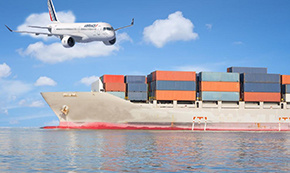
How to Choose the Right Shipping Container? These Key Points and Cases Will Help You Easily Get It Done!
Categories:
Time of issue:
2025-03-07 17:41
Containers are widely used in logistics, moving, trade, and construction. However, with so many types of containers, how do you choose the most suitable one? Today, let's discuss the key points and specific cases of selecting containers to help you solve this problem easily!
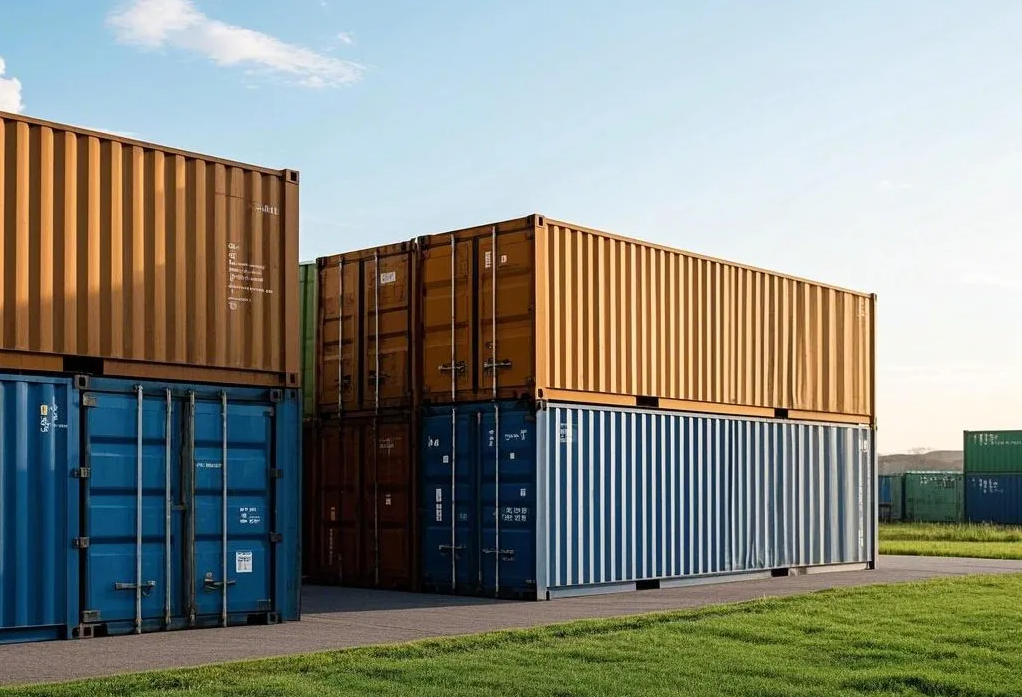
I. Key points for selecting containers
(1) Consider cargo factors
1. Cargo Size and Weight
Before choosing a container, accurately measure the length, width, height, and total volume of the cargo, and estimate the total weight. For example, if transporting a large number of small electronic products, a 20-foot standard dry cargo container is sufficient; but if transporting large machinery or oversized cargo such as yachts, a 40-foot high cube container or a frame container may be needed. At the same time, pay attention to the weight limit of the container. A 20-foot container generally has a weight limit of about 28 tons, and a 40-foot container has a weight limit of about 30 tons.
2. Cargo Characteristics
Different goods have different characteristics, and appropriate containers must be selected to ensure safe transportation. For moisture-sensitive goods such as precision instruments and high-end clothing, containers with good sealing and moisture-proof measures should be selected; for perishable goods such as frozen food and flowers, refrigerated containers are essential; for hazardous goods such as chemicals, containers that meet hazardous goods transportation standards must be used, and they must have corresponding safety markings and protective equipment.
---
(2) Consider transportation factors
1. Transportation Distance and Route
Transportation distance and route also greatly affect container selection. Long-distance sea transportation may face harsh sea conditions and require containers with strong structure and wind and wave resistance; short-distance land transportation or inland river transportation has relatively low requirements for wind and wave resistance of containers. If the transportation route passes through high-temperature areas, consider the heat insulation performance of the container; if it passes through high-humidity areas, pay attention to moisture-proof performance.
2. Transportation Method
Different transportation methods also have different requirements for containers. Sea transportation has high requirements for the waterproof and pressure-resistant properties of containers; railway transportation has specific standards for the size and weight limit of containers; road transportation needs to consider the adaptability of containers to transport vehicles. If the goods need to be transported by multiple modes of transportation, containers that meet multimodal transport standards must be selected.
---
(3) Consider Cost Factors
1. Purchase or Rental Costs
The cost of purchasing containers is higher. The Price of a 20-foot used container ranges from $3,000 to $8,000, and the Price of a new one is even higher; the Price of a 40-foot container is 20%-50% higher than that of a 20-foot container. Renting a container is charged daily; the daily rental fee for a 20-foot container is generally $5-15, and the daily rental fee for a 40-foot container is $8-20. If used for a short period, renting is more cost-effective; if used for a long time and with high frequency, purchasing may be more economical.
2. Transportation Costs
The transportation costs for different types and sizes of containers are different. Full container load (FCL) is suitable for large cargo volumes, while less than container load (LCL) is suitable for small cargo volumes. In addition, loading and unloading fees, insurance fees, etc. should also be considered. Special types of containers have high loading and unloading difficulty, and loading and unloading fees may be higher.
---
(4) Consider Other Factors
1. Container Quality
When selecting a container, carefully check the exterior of the container for deformation, damage, rust, whether the door can be opened and closed normally, whether the sealing is good, whether the floor is flat and firm, and whether there is any rot or damage. For the internal structure, check whether the corner fittings, guide rails, and other components are intact, and whether there are any problems such as poor welding or cracks.
2. Supplier Reputation and Service
Choosing a reputable and experienced supplier is very important. This can be evaluated by checking customer reviews, industry reputation, and years of operation. A high-quality supplier can provide timely consultation, repair, and maintenance services, and can also provide professional support in transportation arrangements, customs declaration, and inspection.
---
II. Specific cases of selecting containers
(1) Moving scenarios
Case 1: Xiaoli, an international student's moving journey
Xiaoli, an international student, is moving from Shanghai to Sydney. The volume of his belongings is about 8 cubic meters. Because the amount of goods is not large, he chose LCL, sharing a container with other goods, and it finally arrived in 67 days. LCL is suitable for transporting small-volume goods and can save costs.
Case 2: A family of four's moving choice
A family of four plans to move, and the volume of their belongings is 23 cubic meters. Initially, they considered LCL, but worried about the long waiting time. Later, they chose a 20GP full container, and it arrived at its destination in just over two months. For medium-sized cargo, if the timeliness requirement is high, choosing a 20GP full container is more appropriate.
Case 3: Moving all furniture from a large-sized house
A family needs to move all furniture from a house with 3 bedrooms and 2 living rooms or more, and the volume of goods is large, about 28 cubic meters. They chose 20GP FCL sea transportation, the safety of goods is guaranteed, and the transportation timeliness can also meet the needs.
---
(2) Trade scenarios
Case 1: Export choice of a clothing company
A clothing company needs to export a batch of autumn and winter clothing to Europe. The total volume of goods is about 45 cubic meters, and the clothing is afraid of moisture and dirt. The company chose a 40HQ container because of its large internal space, which can accommodate all the goods, and its good sealing can effectively prevent seawater and rainwater from eroding the clothing during transportation, ensuring the quality of the goods.
Case 2: Transportation of large equipment by a machinery manufacturing enterprise
A machinery manufacturing company needs to transport a large piece of machinery to Africa. The equipment is large and weighs about 25 tons. Ordinary dry cargo containers cannot meet the requirements. After evaluation, the company chose a frame container. The frame container has no top and side walls, and can be loaded and unloaded from the side and top, making it easy to hoist and fix large machinery, ensuring the safety of the equipment during transportation.
Case 3: Hazardous goods transportation by a chemical company
A chemical company needs to transport a batch of liquid chemicals to Southeast Asia. These chemicals have a certain degree of danger and require special transport containers. The company chose tank containers, which are specifically used for transporting liquid and gaseous bulk cargo. They have good sealing and safety properties, are equipped with corresponding loading and unloading valves and safety devices, and meet the requirements for the transport of dangerous goods.
---
(3) Construction Scenarios
Case 1: Temporary Vacation House in a Tourist Scenic Area
In a tourist scenic area, a temporary vacation house needs to be built. Due to the beautiful scenery, there are high requirements for the building's mobility and environmental protection. The contractor chose a single green shipping container. Its exterior design blends with the natural environment; the interior is simply decorated and equipped with basic living facilities. This meets the tourists' accommodation needs without significantly impacting the scenic area's environment. It can also be easily dismantled and moved when no longer needed.
Case 2: Multi-functional Coffee Shop on Campus
A school wants to add a coffee shop on campus to meet students' recreational and learning needs. They used a double-decker container, with the lower level in yellow and the upper level in black, creating a visually striking and vibrant appearance. The interior is decorated according to functional zones. The yellow lower level serves as the coffee shop's dining area, while the black upper level is used as a study and rest area for students. This fully utilizes the space of the container to create a multi-functional campus social space.
---
3. Summary
Selecting the right container requires considering several factors, including cargo characteristics, transportation needs, cost factors, container quality, and supplier service. Through the analysis of the above points and cases, we hope to provide you with some references. Whether it is in moving, trade or construction scenarios, choosing the right container not only ensures the safety of the goods but also improves transportation efficiency and reduces costs. If you have any other questions, please feel free to leave a message to discuss, we look forward to exchanging ideas!
Service Hotline: 0755-82171929 13560787209

WeChat QR Code
Logistics Query
Quickly obtain the latest logistics information


Scan code contact
Address: 25/F Room C,Tower A, Honglong Century Plaza, No. 4002 Shennan East Road,Luo Hu District, Shenzhen, China
Zhongshan Address: Room 805, Floor 8 , Poly Plaza office Building, No. 1 Shiji East Road, Port Town, Zhongshan, Guangdong
Changsha Address: 12020, Building 2, Fudi Xingguang Tiandi, Yuhua District, Changsha .,Hunan
Indonesian company:PT VTOP LOGISTIK INTERNATIONAL
Indonesian address:Jalan Pantai Indah Barat Komplek Toho Blok A No 18 ,Kec.Penjaringan,Kel.Kamal Muara,Jakarta Utara

WeChat ID
Scan code contact