


All categories >
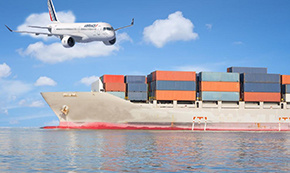
How are containers quickly transshipped?
Categories:
Time of issue:
2024-12-23 00:00
The international transshipment container terminal is a key node in the global logistics network, allowing goods to be transferred from one ship to another without unloading, continuing their journey to the final destination. This operation greatly improves transportation efficiency and reduces the dwell time of goods throughout the supply chain.

1. Ship Scheduling and Berth Allocation
Terminal operators need to efficiently manage the arrival and departure times of vessels, ensuring that ships can load and unload according to the scheduled timetable.
Berth allocation should be optimized based on factors such as the size and type of vessel, as well as the expected stay duration, to maximize the utilization of terminal resources.
2. Container Loading and Unloading
Using shore cranes (STS Crane) to lift containers from ships onto trailers or vice versa from trailers onto ships.
During this process, strict adherence to safety regulations must be observed to ensure the safety of operators and proper use of equipment.
3. Yard Management
Containers are temporarily stored in the terminal's yard, waiting to be loaded onto the next ship or land transport vehicle.
Yard management involves classifying storage for empty and loaded containers, tracking their locations, and ensuring quick and accurate retrieval of containers awaiting transshipment.
4. Information Management System
Modern terminals rely on advanced information technology systems to track and manage the entire process, including cargo status, location, and movement history.
The application of automated data exchange (EDI), real-time monitoring systems, and Internet of Things technology can significantly enhance operational efficiency and service quality.
5. Customs Clearance and Other Government Procedures
International transshipment goods usually enjoy simplified customs clearance procedures but still need to meet import requirements of the destination country.
The terminal should assist customers in preparing and submitting necessary documents to ensure that goods enter and exit ports legally and compliantly.
6. Multimodal Transport Connections
Transshipment terminals are not only part of maritime transport but should also have good connectivity with other transport modes such as railways and highways.
Providing seamless connection services can help goods reach inland destinations more quickly.
7. Emergency Response Plan
Develop detailed emergency plans to respond to potential incidents such as natural disasters, mechanical failures, or safety accidents.
'Regularly train employees and organize drills to ensure that everyone can act quickly and effectively in emergencies.
Logistics Query
Quickly obtain the latest logistics information


Scan code contact
Address: 25/F Room C,Tower A, Honglong Century Plaza, No. 4002 Shennan East Road,Luo Hu District, Shenzhen, China
Zhongshan Address: Room 805, Floor 8 , Poly Plaza office Building, No. 1 Shiji East Road, Port Town, Zhongshan, Guangdong
Changsha Address: 12020, Building 2, Fudi Xingguang Tiandi, Yuhua District, Changsha .,Hunan
Indonesian company:PT VTOP LOGISTIK INTERNATIONAL
Indonesian address:Jalan Pantai Indah Barat Komplek Toho Blok A No 18 ,Kec.Penjaringan,Kel.Kamal Muara,Jakarta Utara

WeChat ID
Scan code contact