


All categories >
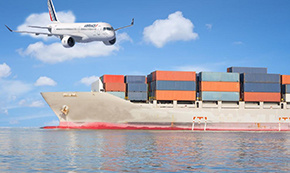
Cross-border e-commerce export customs declaration process and precautions (A detailed explanation of international air freight and international sea freight customs declaration)
Categories:
Time of issue:
2024-11-29 17:19
1. Prepare Materials
When conducting customs declaration for cross-border e-commerce exports, a series of detailed documents must be provided to ensure a smooth customs process. The following are the main documents typically required during the customs declaration process:
1. Export Power of Attorney;
2. Export Goods Detail List;
3. Packing List;
4. Invoice;
5. Export License, export documentation, etc.
2. Path of Cross-Border E-Commerce Customs Declaration
Import: Customs declaration entity - Customs declaration company (entrusted by cross-border e-commerce enterprises).
The customs declaration company submits the declaration list to the pilot platform (considered as customs declaration), and customs conducts document review (comparison of orders, waybills, payment slips, and declaration lists), risk control, and other operations.
Export: Customs declaration entity - Cross-border e-commerce enterprise.
The cross-border e-commerce enterprise submits the declaration list to the pilot platform (considered as customs declaration), and customs conducts document review and other operations.
After the goods leave the country, the logistics company must log in to the pilot platform to confirm the departure information. The e-commerce enterprise regularly selects the information of goods that have left the country and initiates the export consolidation declaration. Subsequently, the e-commerce enterprise informs the customs declaration company of this information. The customs declaration company logs in to the electronic port for customs declaration, and the operation process is the same as the traditional model. After completing the customs declaration, it informs the e-commerce enterprise of the customs declaration number. After receiving the customs declaration number, the e-commerce enterprise logs in to the pilot platform to fill in that number. After customs review, mandatory clearance is conducted, and the tax refund and settlement copies of the customs declaration are printed. This process ensures the standardization and efficiency of export customs declaration.
3. Overall Process of Cross-Border E-Commerce Export Customs Declaration
1. Prepare Customs Declaration Documents
Before the goods arrive at customs, a series of documents required for clearance must be prepared, such as commercial invoices, product lists, customs power of attorney, carrier's loading list, and verification forms. Before the goods are exported and cleared, it is essential to confirm that all documents are complete to avoid customs detention due to incomplete documentation, which could affect the efficiency and timing of transportation.
2. Formal Customs Declaration
After preparing the materials, the next step is the formal customs declaration process. During this process, detailed information must be submitted to customs, and customs staff will review and verify the information. Once the review is correct, the goods can pass through customs smoothly. It is worth noting that if the value of the goods exceeds the local customs exemption limit, corresponding duties must also be paid.
Land Transportation Customs Declaration
Land transportation is usually divided into chartered and shared vehicle forms, suitable for exports to places like Hong Kong, Thailand, and Vietnam. Land transportation customs declaration can follow the regular customs declaration process. For large quantities of goods, it is recommended to prepare all necessary documentation in advance; for smaller quantities, consider collaborating with third-party logistics companies to save time and effort.
Sea Transportation Customs Declaration
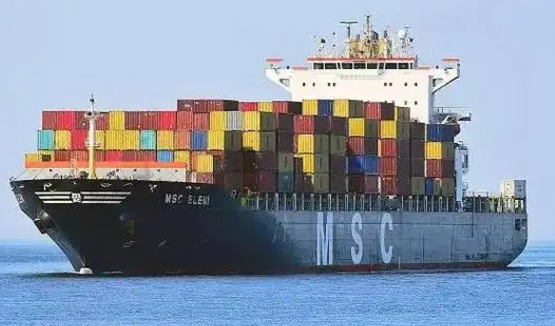
Sea freight exports mainly involve two methods: LCL (Less than Container Load) and FCL (Full Container Load). In LCL exports, customs documents can be prepared before handing over the goods to the shipping company and submitted along with the goods; alternatively, the goods can be delivered first, followed by the submission of customs documents. For FCL exports, due to the larger volume of goods, it is strongly recommended to prepare all necessary documents in advance, including invoices, contracts, and packing lists, to ensure efficient transportation. The customs declaration locations for LCL and FCL also differ; the former may be declared at places like Yantian Warehouse or Foreign Trade Warehouse, while the latter is mainly at ports like Yantian Port or Shekou Port.
Air Transportation Customs Declaration
For goods exported by air, customs declaration is usually handled by the courier company. Customers can prepare customs documents in advance or hand over the clearance documents to the courier company, entrusting them to handle the customs declaration procedures. However, the courier company may charge a certain operational fee.
4. Precautions for Cross-Border E-Commerce Export Customs Declaration
The following points need to be noted during the customs declaration process:
1. Understand the customs policies and requirements of the destination country online in advance, as each country has different customs declaration regulations.
2. Some countries require customs duties to be paid during the declaration process, so carry currency with you.
3. Provide relevant documents such as export power of attorney, export goods detail list, packing list, invoice, export license, etc.
If the normal documents are complete, under what circumstances might customs still detain the goods?
1. If your goods are sensitive items, such as food or liquids, and you insist on using general cargo channels, there is a high probability of issues arising. They are generally monitored and the chances of detention are significant.
2. Prohibited items, such as certain foods, drugs, white powders and crystals, firearms, etc., cannot be shipped.
3. Situations where the declared value does not match the goods, for example, declaring high-value goods as worth only a few dollars is absolutely not allowed.
If your goods do not have the above issues, they can be successfully delivered to the recipient. If there is a detention situation, contact the freight forwarding company for assistance.
Choose a reliable freight forwarding company, provide them with the goods information and recipient information, and then you can wait for the transaction to be completed with peace of mind, while your customers can also wait for their goods with confidence. Of course, if any special situations arise during the process, timely communication and appropriate measures should be taken to handle them. This not only ensures the safe and timely delivery of goods but also enhances customer satisfaction, earning a good reputation for your business.
Logistics Query
Quickly obtain the latest logistics information


Scan code contact
Address: 25/F Room C,Tower A, Honglong Century Plaza, No. 4002 Shennan East Road,Luo Hu District, Shenzhen, China
Zhongshan Address: Room 805, Floor 8 , Poly Plaza office Building, No. 1 Shiji East Road, Port Town, Zhongshan, Guangdong
Changsha Address: 12020, Building 2, Fudi Xingguang Tiandi, Yuhua District, Changsha .,Hunan
Indonesian company:PT VTOP LOGISTIK INTERNATIONAL
Indonesian address:Jalan Pantai Indah Barat Komplek Toho Blok A No 18 ,Kec.Penjaringan,Kel.Kamal Muara,Jakarta Utara

WeChat ID
Scan code contact