


All categories >
What are the main requirements for weight limits for shipping containers?
Categories:
Time of issue:
2024-10-25 17:43
The weight limit of shipping containers mainly has the following requirements:
Self-limited weight of container body:
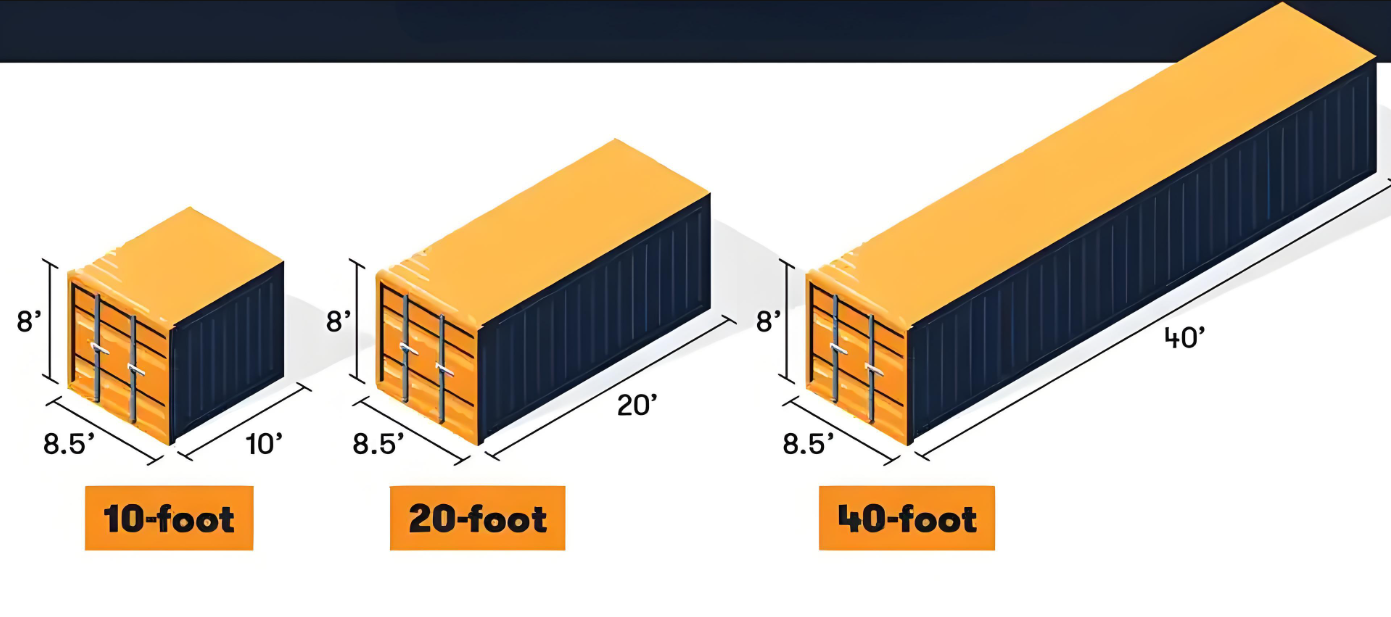
Each container will clearly indicate its maximum weight (max weight) and tare weight (tare weight). The former minus the latter is the maximum loading weight of the container. Some container doors will be directly marked with a payload to this limit weight. For example, the common 20-foot ordinary dry cargo box is generally limited to about 21.5 tons. The 40-foot ordinary dry cargo box is generally limited to about 26 tons. The 40-foot high box is generally limited to about 25.5 tons. If the loading exceeds this limit, damage such as box deformation, bottom plate falling off and top beam bending may occur, and all losses arising therefrom will be borne by the loader.
Weight Limits of Shipping Companies:
Different shipping companies have different weight limit policies for containers, usually based on the standard of not damaging the container and ensuring the safety of ship transportation. In the case of space and weight imbalance, such as heavy cargo more concentrated areas, shipping companies may be more stringent weight restrictions. The sale of space between some shipping companies is generally calculated according to the standard of 1TEU (standard container) = 14 tons or 16 tons, and those exceeding the weight may not be allowed on board. During the explosion period, the shipping company may adjust the weight limit for each box type according to the heat of the route.
Weight limit requirements for port areas:
After the container ship docks, it needs the crane of the dock to carry out loading and unloading operations, and then it is towed to the container yard by truck and then lifted down by forklift. If the weight of the container exceeds the load of the machinery and equipment in the port area, it will bring difficulties to the operation of the terminal and yard. Therefore, for some small ports with backward equipment, the shipping company will generally inform the port of the weight limit in advance, and goods exceeding this limit may be rejected.
Weight Limits at the Port of destination:
The port of destination in some countries or regions also has corresponding restrictions on the weight of the container. For example, the road transport weight limit in the United States is strict, and many containers need to be towed inland by road after being unloaded at the dock, so the road weight limit has also become the reason why shipping companies limit the weight of containers.
In addition, there are strict regulations on the declaration of container weight in international shipping. The provision of VGM(Verified Gross Mass, verified total container weight) information is mandatory. The allowable deviation range of VGM is not more than 5% of the actual weight or not more than one ton, whichever is the smaller.
Logistics Query
Quickly obtain the latest logistics information


Scan code contact
Address: 25/F Room C,Tower A, Honglong Century Plaza, No. 4002 Shennan East Road,Luo Hu District, Shenzhen, China
Zhongshan Address: Room 805, Floor 8 , Poly Plaza office Building, No. 1 Shiji East Road, Port Town, Zhongshan, Guangdong
Changsha Address: 12020, Building 2, Fudi Xingguang Tiandi, Yuhua District, Changsha .,Hunan
Indonesian company:PT VTOP LOGISTIK INTERNATIONAL
Indonesian address:Jalan Pantai Indah Barat Komplek Toho Blok A No 18 ,Kec.Penjaringan,Kel.Kamal Muara,Jakarta Utara

WeChat ID
Scan code contact